Do developer teams use feature flags more for business needs or risk mitigation?

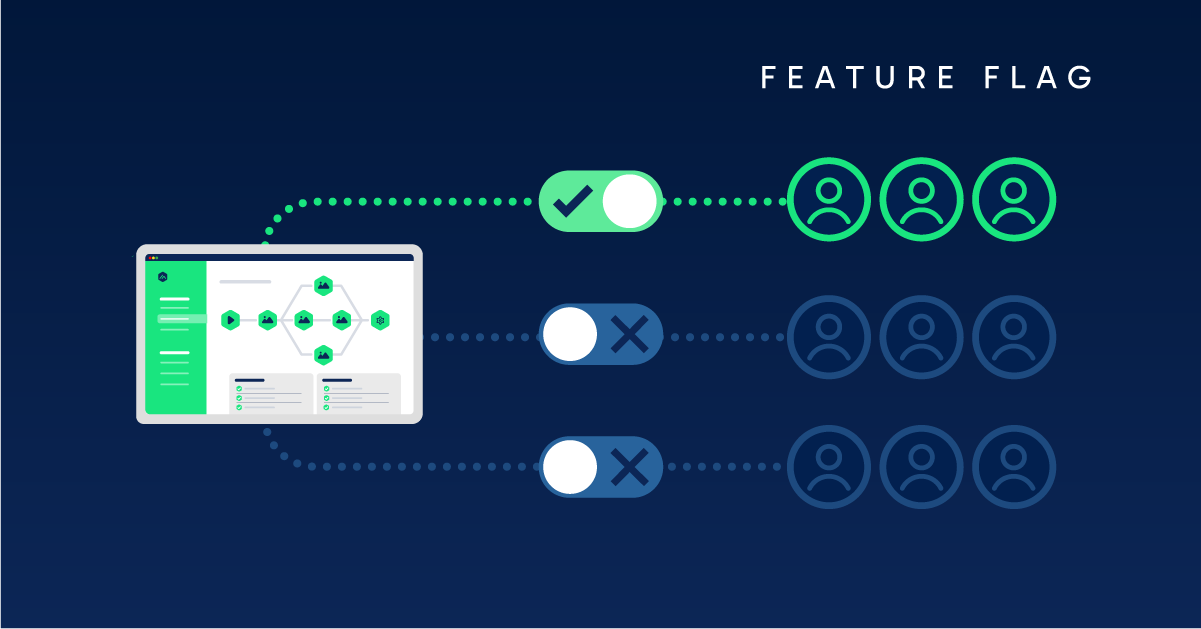
Feature flag technology is widely used by development and product teams for both business-driven reasons and risk mitigation. Here's a balanced view of why teams use feature flags, supported by insights from Redditors:
Business-Driven Reasons
A/B Testing and Experimentation
Feature flags are essential for A/B testing, allowing teams to experiment with different versions of a feature to determine which performs better. "We use it for A/B testing."
They enable incremental development and testing in production, which can lead to faster innovation and better user experiences. "Feature flags let you push all code to main, even if a feature is only partially completed."
Improved Version Control
Feature flags help manage long-lived feature branches, making it easier to merge changes into the main branch frequently. "Feature flags do more than just phases rollout with A/B testing, but make it possible to incrementally develop a feature, merging to main much more frequently."
Faster Feature Releases
They allow teams to release features faster by decoupling deployment from release, enabling continuous delivery. "Feature flags is a modern engineering technology that decouples code deployments from feature releases, giving you control over which end-users see which features."
Risk Mitigation Reasons
Controlled Rollouts
Feature flags enable gradual rollouts, allowing teams to test features with a subset of users before a full release, reducing the risk of widespread issues. "Being able to slowly roll out a feature to a subset of users was powerful for testing and end-to-end verification."
Immediate Rollbacks
They provide the ability to quickly disable a problematic feature without redeploying the entire application, which is crucial for maintaining uptime and customer trust. "Being able to roll a single broken feature back to 0% with a button click meant that whenever outages did occur, they only affected a small % of users and were able to be mitigated immediately."
Testing in Production
Feature flags allow for testing in production environments, which can be more reliable than staging environments. "Feature flags allow us to deploy changes that haven't been fully tested, so they don't block other changes that need to go out sooner."
Challenges and Considerations
Code Complexity
The use of feature flags can complicate the codebase, making it harder to read and maintain. "Feature flags needed to be coded manually, so code ended up being littered with
if (featureFlag.isEnabled()) { ... } else { ... } }blocks."
Testing and Maintenance
Ensuring that all permutations of feature flags are tested can be challenging, and there is a need for good cleanup practices to avoid technical debt. "Has the system actually been tested with all the permutations of the flags enabled and disabled?"
Conclusion
Both business-driven and risk mitigation reasons are important for using feature flags. They enable faster, safer, and more controlled feature releases, but they also require disciplined practices to manage the added complexity.
