
Unleash AI Governance: A Practical Feature Flag Control Model
If you searched for Unleash AI governance, the practical question is probably not "does a feature flag vendor mention AI?" The stronger question is: can your feature management workflow govern AI behavior as a release decision, with explicit approval, targeted exposure, evidence, audit history, rollback, and cleanup?
Unleash's public documentation gives useful category signals. It documents an MCP server for AI coding assistants, role-based access control, change requests, and event logs. Those are governance building blocks. They still need to be assembled into an operating model that answers what changed, who approved it, who saw it, what evidence justified expansion, how rollback works, and when the temporary control is removed.
This guide turns the vendor query into a practical evaluation frame. It is not a claim that FeatBit has feature parity with any Unleash add-on, and it is not an attack on Unleash. It is a control model for teams deciding whether Unleash, FeatBit, or another feature management platform can support AI governance in production.
What The Search Intent Usually Means
A navigational query like "Unleash AI governance" usually carries one of four jobs:
| Reader job | What the reader needs to decide |
|---|---|
| Existing Unleash customer | Whether current Unleash controls are enough for AI-assisted development or AI feature rollout. |
| Platform evaluator | Whether Unleash-style governance should be compared with FeatBit, LaunchDarkly, DevCycle, Statsig, or an internal platform. |
| Security or compliance reviewer | Whether feature flag changes can produce usable evidence for approvals, audit, and incident response. |
| AI platform team | Whether prompts, model routes, retrieval profiles, and agent modes can be released without uncontrolled blast radius. |
That search intent is more specific than a generic AI governance explainer. The reader already has a vendor name in mind. The page should therefore help them evaluate a feature management control plane, not repeat broad governance vocabulary.
The Minimum Governance Model For AI Feature Management
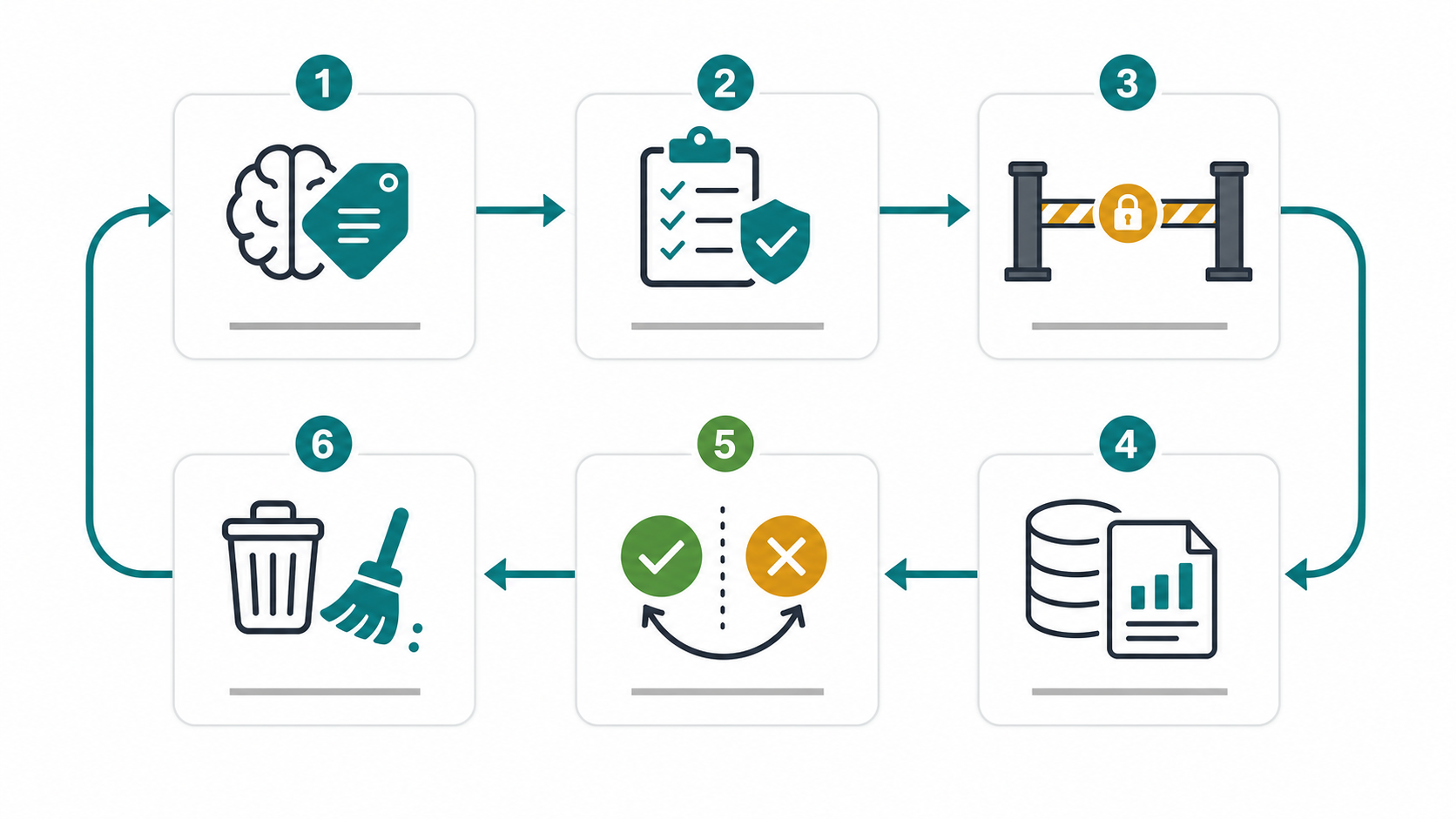
For AI work, governance becomes useful when policy reaches a runtime decision point. A policy can say that high-risk AI behavior needs staged rollout and audit evidence. A feature management platform can make that policy executable by deciding which behavior is active for a given user, account, environment, region, workflow, or risk class.
Use this minimum model before comparing vendors:
| Control layer | Governance question | Evidence to preserve |
|---|---|---|
| Identity and access | Who may create, approve, or apply production changes? | role, permission, approver, service account |
| Release control | Which AI behavior is active for this context? | flag key, variation, targeting rule, rollout stage |
| Approval flow | Who accepted the risk of the next exposure step? | approval record, scope, decision reason |
| Runtime evidence | What actually ran and what happened? | exposure event, metric event, trace, evaluation result |
| Audit trail | Who changed the control state and when? | event log, before-and-after state, operator |
| Rollback | How can exposure be narrowed or stopped quickly? | rollback variation, trigger, operator, containment time |
| Lifecycle cleanup | When does this temporary control end? | owner, review date, cleanup rule, archive decision |
The important point is separation. RBAC is not the same as rollout evidence. An audit log is not the same as approval. An MCP tool is not the same as governance. Each layer needs a clear job.
What Unleash Public Docs Show
Unleash's documentation describes several pieces that matter for this evaluation.
The Unleash MCP Server documentation presents a purpose-built MCP server for managing Unleash feature flags through AI coding assistants. The documented tool surface includes evaluating whether a code change needs a flag, detecting existing flags, creating flags, managing rollouts, auditing, and generating cleanup instructions. That is relevant because AI-assisted flag creation can increase speed, but it can also increase production mutation risk and stale flag volume.
Unleash's change request documentation describes approval steps before environment changes, environment-specific configuration, required approvals, scheduled changes, and change request states. That is an important governance primitive for production environments where a direct flag change should not immediately affect users.
Unleash's events documentation describes event logs and timelines for tracking changes across an instance, including filtering and export options. That matters because a future reviewer needs to reconstruct what changed, by whom, and where.
Unleash's role-based access control documentation is relevant to identity and access boundaries. For AI governance, the access question is not only who can edit a flag. It is who can change production AI behavior, who can approve broader exposure, and which service accounts or assistants can act in each environment.
These are observed product documentation points, not a full security or compliance assessment. A buyer still needs to verify edition, deployment model, retention, export, workflow, and policy fit for their own environment.
Where AI Changes Raise The Bar
AI changes create governance pressure because the production behavior may change without a traditional code deployment.
Examples include:
- switching a support workflow from a stable model route to a candidate route;
- changing the prompt profile for one account segment;
- enabling retrieval from a new knowledge source;
- allowing an agent to move from observe-only mode to approval-required mode;
- expanding an AI feature from internal users to a 5 percent external canary;
- letting an assistant create or modify flags through an MCP server.
Each of those changes needs a release key. The release key can be a feature flag key, experiment key, change request ID, or internal release ticket. Without a shared key, governance evidence fragments across dashboards, chat approvals, deployment logs, model configuration, and incident notes.
NIST's AI Risk Management Framework is useful context here because it frames AI risk management as an ongoing practice for managing risk to individuals, organizations, and society. NIST also notes that AI RMF 1.0 is voluntary guidance and is being revised, so teams should treat it as risk-management context rather than a certification shortcut.
A Practical Unleash AI Governance Checklist
Use this checklist when evaluating Unleash for AI governance, or when comparing Unleash with FeatBit or another platform.
| Evaluation question | Why it matters |
|---|---|
| Which AI surfaces are controlled? | Prompt, model route, retrieval source, tool authority, approval mode, fallback, and rollout percentage may need separate control. |
| Does the platform separate creation from exposure? | Creating a flag should not automatically release an AI behavior to production users. |
| Can approvals be scoped by environment and risk? | Production, regulated segments, billing, security, and customer-visible AI behavior often need stricter gates. |
| Can AI assistants operate with constrained authority? | Read-only discovery, staging creation, and production rollout should not share one broad credential. |
| Is actual exposure recorded? | A change log says a control changed; exposure events show which users, accounts, or workflows actually received the candidate behavior. |
| Can rollback be narrow? | Operators should be able to reduce one risky prompt, model route, tool tier, or rollout cohort without disabling unrelated AI features. |
| Can lifecycle ownership be enforced? | Temporary AI release flags need owners, review windows, evidence rules, and cleanup paths. |
| Does the deployment model fit data and audit boundaries? | Some teams need flag state, targeting data, audit history, and automation credentials inside their own infrastructure. |
This checklist is deliberately operational. Governance fails when it is only a feature list.
A Control Contract For One AI Release
Before an AI behavior reaches external users, write the contract that the platform must support.
ai_release_control:
  release_key: support_answer_route
  owner: support_ai_platform
  risk_tier: medium
  controlled_unit: model_route
  default_variation: baseline
  candidate_variation: candidate_v2
  first_audience: internal_support_users
  excluded_contexts:
    - regulated_region
    - legal_hold_account
  approval_required_for:
    - external_customer_exposure
    - rollout_above_10_percent
    - autonomy_increase
  evidence_required:
    - offline_eval_summary
    - exposure_event
    - quality_review_score
    - p95_latency
    - support_escalation_rate
  rollback_action: set_variation_to_baseline
  audit_sources:
    - flag_event_log
    - change_request
    - release_decision_ticket
  cleanup_rule: review_after_two_healthy_release_windows
The exact fields will vary. The test is whether your platform can support the control behavior implied by the contract. If the answer is "the team will remember," governance is not ready.
How FeatBit Frames The Same Problem
FeatBit's view is that feature flags are release-decision infrastructure. They are not only code toggles. They are the runtime control layer that lets teams separate deployment from release, target exposure, observe production behavior, roll back quickly, and clean up temporary controls after a decision is made.
For AI governance, that means the feature flag can represent:
- whether an AI feature is available;
- which prompt, model route, retrieval profile, or strategy is active;
- whether an agent is in
off,observe,search_only,draft,approval_required, orfallbackmode; - which rollout stage or experiment variation applies;
- which owner and evidence rule controls expansion;
- which rollback state should take effect during an incident.
FeatBit can be evaluated when the operating model requires open-source or self-hosted control, API automation, audit logs, targeting, experimentation, lifecycle discipline, and integration with AI coding workflows. The relevant FeatBit reader journey is broader than this single vendor query: feature flags as the AI control layer, AI governance with feature flags, feature flag lifecycle management, and self-hosted feature flags.
The point is not that every AI governance task belongs in a feature flag platform. Legal review, model risk review, privacy review, authorization, sandboxing, and data policy still belong in their own systems. FeatBit's role is the release-control layer: who sees which behavior, under what conditions, with what evidence, and with what rollback path.
The Evidence Map To Require
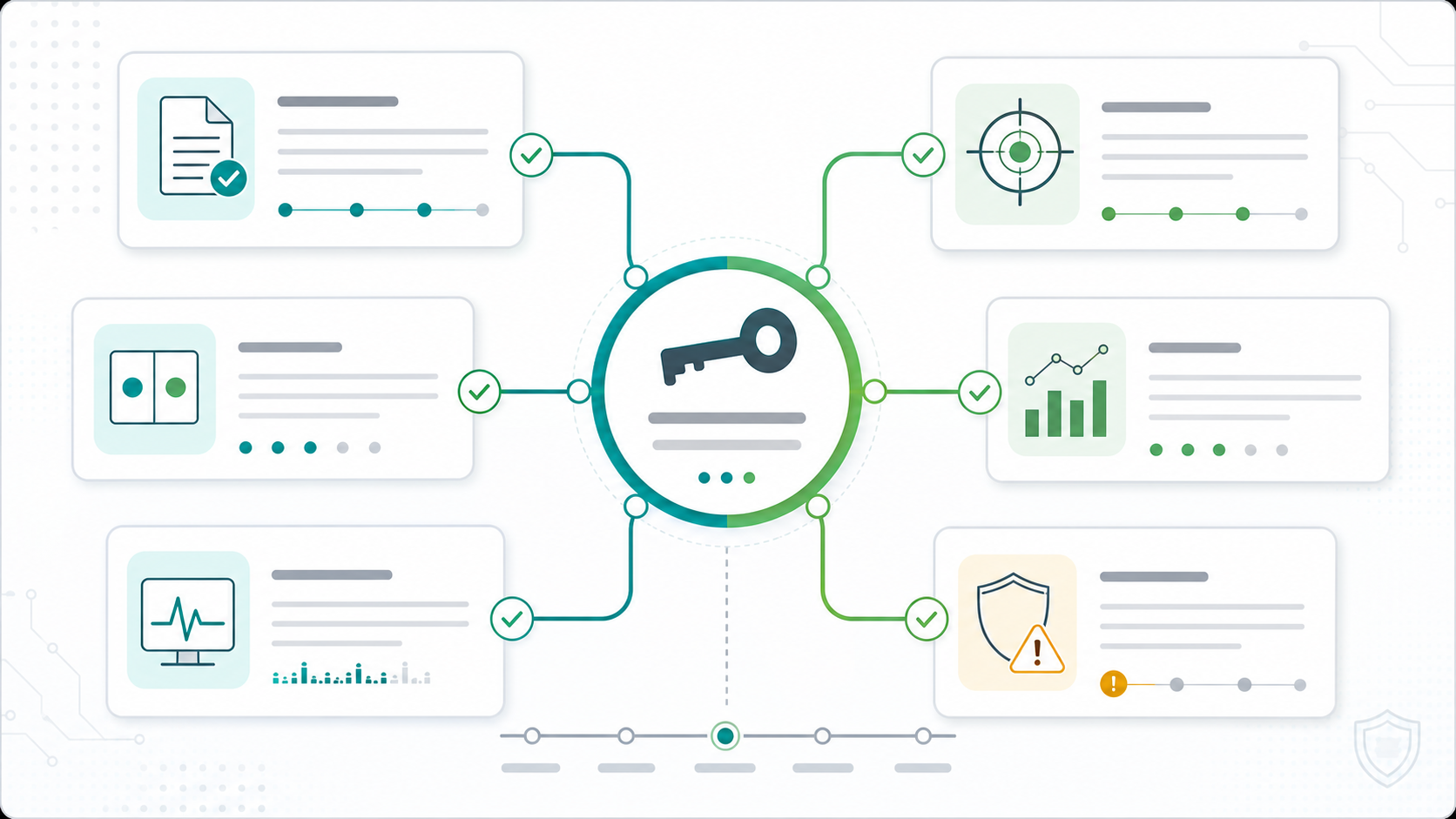
A strong AI governance workflow produces an evidence packet that survives after the rollout.
| Evidence record | Minimum fields |
|---|---|
| Release intent | release key, owner, behavior, risk tier, safe default |
| Approval | approver, approved scope, timestamp, evidence reviewed |
| Targeting scope | environment, segment, account, region, percentage, exclusion rule |
| Evaluation | flag key, variation, evaluation context, fallback used or not used |
| Runtime outcome | quality, latency, cost, error, support, business, or experiment metric |
| Audit event | who changed the control, what changed, previous state, new state |
| Decision | continue, expand, narrow, roll back, pause, archive, or clean up |
OpenFeature's flag evaluation specification is useful vendor-neutral language for this layer because it defines typed evaluation with a flag key, default value, and evaluation context. Whether the control plane is Unleash, FeatBit, or another platform, the application should evaluate a named decision for a specific context and preserve enough detail to explain what ran.
Common Evaluation Mistakes
Treating AI governance as an MCP feature. MCP can let an assistant call tools. It does not replace scoped credentials, production approval, audit review, release evidence, or rollback policy.
Auditing only the configuration change. An event log can show that a flag changed. It does not, by itself, prove which customer, account, workflow, prompt, model route, or fallback actually ran.
Using one global AI flag. A global kill switch is useful during an incident. Normal governance needs narrower controls for prompt profile, model route, retrieval source, tool tier, approval mode, rollout stage, and incident state.
Approving creation instead of exposure. A flag can exist safely while disabled. The governance decision is usually the next exposure step: internal users, canary, customer segment, experiment, or broad rollout.
Letting AI-created flags skip lifecycle rules. Faster flag creation is valuable only if each flag has a type, owner, fallback, evidence rule, and cleanup path.
Confusing compliance evidence with compliance proof. A feature flag platform can help produce evidence for review. It does not certify that an AI system satisfies a law, standard, or contract.
When FeatBit Is Worth Evaluating Alongside Unleash
Evaluate FeatBit when the question behind "Unleash AI governance" is really about operating model fit:
- you want open-source and self-hosted feature management infrastructure;
- your platform team needs flag data, targeting rules, audit history, and automation credentials inside your own boundary;
- AI assistant workflows need scoped access to feature flag operations without unchecked production authority;
- rollout, experimentation, audit, and lifecycle cleanup should live in one release-control model;
- temporary AI controls must be easy to review, retire, or document as permanent operational policy;
- cost predictability and deployment ownership matter as much as the feature list.
Stay with Unleash-native governance when Unleash is already the system of record, its approval and access model fits your production risk, and your main job is to improve governance inside that existing platform.
The decision should be made with a short pilot, not a spreadsheet alone. Pick one non-critical AI release, define the control contract, create the flag disabled by default, expose it only to an internal audience, record actual exposure, review evidence, roll back once in a test, and clean up or document the control. The platform that makes that loop boring is the better governance fit.
Source Notes And Internal Link Plan
This article is a standalone vendor-query guide for "Unleash AI governance." It is intentionally different from Unleash MCP Server Alternative, which focuses on MCP server evaluation, and from AI governance with feature flags, which is a vendor-neutral control playbook.
- Unleash context: Unleash MCP Server documentation, Unleash change requests, Unleash events, and Unleash RBAC.
- Standards context: NIST AI Risk Management Framework and OpenFeature flag evaluation specification.
- FeatBit implementation context: feature flags as the AI control layer, AI governance with feature flags, feature flag lifecycle management, self-hosted feature flags, and measurement design for release decisions.
- FeatBit product docs to verify implementation details: targeting rules, percentage rollouts, audit logs, IAM overview, webhooks, and OpenTelemetry integration.
Image And Open Graph Notes
- Use
/images/blogs/unleash-ai-governance/cover.pngas the Open Graph image because it summarizes AI release control, evidence, audit, and rollback without implying a real vendor UI. - Use
/images/blogs/unleash-ai-governance/governance-control-loop.pngnear the opening because it visualizes the six-step operating loop in the body text. - Use
/images/blogs/unleash-ai-governance/governance-evidence-map.pngin the evidence section because it shows the records that make AI governance reviewable.
Next Step
Before choosing an AI governance path for feature management, write one control contract for a real upcoming AI change. If your platform can represent the owner, target scope, approval boundary, evidence, audit trail, rollback action, and cleanup rule, you have a practical governance model. If it cannot, solve that operating gap before expanding AI behavior to more users.